Cabin vs Cargo the Complete Guide
Flying with a dog starts with one key decision: will your dog fly in the cabin with you, or in cargo?
At first glance the answer seems simple. Small dogs go in cabin and large dogs go in cargo. But once you factor in airline rules, route restrictions, and your dog’s comfort, the decision becomes much more nuanced.
This guide breaks down cabin vs cargo travel so you can choose the safest and most practical option. If you are new to flying with a dog, it’s worth understanding the full process of flying with a dog before you make your decision.
Cabin vs Cargo: What’s the difference?
Where your dog travels during the flight typically depends on their size, weight, and whether they meet airline requirements. Understanding this difference is one of the first steps when planning air travel with your dog.
Small dogs fly in the cabin if they meet size limits, while larger dogs must travel in cargo unless they are service dogs.
Small dogs under 8 to 10 kg (15 to 22 lbs) including their carrier can fly in-cabin with you – provided they can fit under the seat in front of you. Larger dogs that exceed those limits usually have to travel in the cargo area in a hard-sided crate large.
Snub-nosed dogs, known as brachycephalic breeds, are often not allowed to fly in cargo by most airlines due to breathing risks. This makes in-cabin travel the only option for these breeds.
Service dogs are treated differently and are typically allowed to fly in the cabin at no cost, regardless of size, as long as they meet airline requirements.
Can dogs fly in the cabin?
For most pet owners flying in the cabin is the preferred option because it allows you to stay close to your dog throughout the journey. Your dog will need to remain inside a soft-sided carrier that fits under the seat in front of you. Airlines are strict about size and behavior requirements.
👉 If you’re not sure whether your dog qualifies for cabin travel, start here: Can my dog fly in the cabin?
This quick checklist breaks down the exact size, weight, and carrier requirements most airlines use, and helps you determine your options before booking a flight.
The biggest advantage of cabin travel is peace of mind. You can see your dog, respond to them if they become anxious, and avoid the risks that home with handline and separation. For many dogs, especially those already comfortable in confined spaces, this will make the flight significantly less stressful. One downside is that in-cabin space is limited. Airlines only allow a small number of pets per flight. And not all routes permit pets in the cabin. This means planning ahead and booking early is essential.
Because each airline sets its own rules for size limits, carriers, and routes, it’s important to compare policies before booking. You can review the best airlines for flying with a dog to see which ones are most flexible for in-cabin travel.
Can dogs fly in cargo?
If your dog is too large to fit under the seat, cargo is usually the only opion.
Dogs traveling in cargo are placed in a hard-sided crate that meets airline specifications. They are transported in a designated section of the plane that contrary to what many people assume, is not the same as the luggage area. It is pressurized and temperature-controlled to ensure animals can travel safely.
Cargo travel involves more variables. Your dog will be handled by airline staff during loading and unloading. You won’t have access to them during the flight either. There are also restrictions based on weather conditions, extreme heat or cold can affect whether pets are allowed to travel. When done properly, with a well trained dog, an appropriate crate, and a direct flight – cargo travel is generally safe. It does require more preparation and carries more inherent risk than having your dog in the cabin with you.
If your dog needs to travel in cargo, preparation becomes even more important. Understanding the step-by-step process of flying with a dog will help you avoid common issues at check-in and arrival.
Is it safe for dogs to fly in cargo?
For larger dogs, cargo travel is considered safe when proper precautions are taken as it does introduce additional stress due to separation and handling. Choosing a reputable airline, avoiding layovers, discussing cargo travel with your vet, and ensuring your dog is comfortable in their crate all play a major role in reducing risk.
For small dogs, flying in the cabin is almost always the safer and less stressful choice because it eliminates these variables entirely. For many dogs, especially when flying direct routes with reputable airlines, cargo travel can be a safe and practical option when proper precautions are taken.
Can Snub-Nosed (Brachycephalic) Dogs Fly in Cargo?
Snub-nosed dogs, known as brachycephalic breeds, face higher risks when flying, particularly in cargo. Because of their shorter airways, they are more prone to breathing issues under stress or temperature changes. For this reason, most airlines will not allow brachycephalic dogs to fly in cargo at all.
If you have a breed like a pug, bulldog, or boxer, cabin travel is strongly recommended and often the only option available.
Can Service Dogs Fly in the Cabin for Free?
Service dogs are treated differently from pets, and in most cases, they can fly in the cabin at no cost to the handler.
Unlike regular pets, service dogs are not always required to stay in a carrier and can remain at their handler’s feet during the flight. They must be properly trained, well-behaved, and able to handle the travel environment without disruption. Airlines require advance notice and sometimes documentation, especially for international routes. Requirements can also vary depending on the destination country.
Note: emotional support animals are no longer classified as service animals by most airlines, meaning they are subject to standard pet rules and fees.
How much does it cost to fly with a dog?
The cost of flying with a dog depends on how they travel.
Cabin travel is the more affordable option, with fees typically ranging from $75 to $200 per flight. Cargo travel can cost anywhere from $200 to over $1000 depending on your dog’s size, crate dimensions, and the route.
Service dogs are usually allowed to fly at no cost as long as they meet the airline requirements.
How much does pet relocation cost?
If you use a professional pet relocation service, costs are significantly higher, but include handling, paperwork, logistics and coordination. Most international pet relocation services cost between $2000 and $6000+, depending on the destination, your dog’s size, and the complexity of the move.
While these services can simply the process, many travelers choose to handle the process themselves to save money, especially when they understand the requirements ahead of time.
Other factors that affect in-cabin vs cargo
Airline policies ultimately determine what’s possible, even if your dog meets general size requirements. Factors that can affect this include the destination country, aircraft type, flight duration, and seasonal weather restrictions. International travel, in particular, often comes with stricter rules than limit cabin availability.
Because of this, many travelers end up choosing flights based on pet policies rather than schedule or price.
What Beckham and I do (real experience)
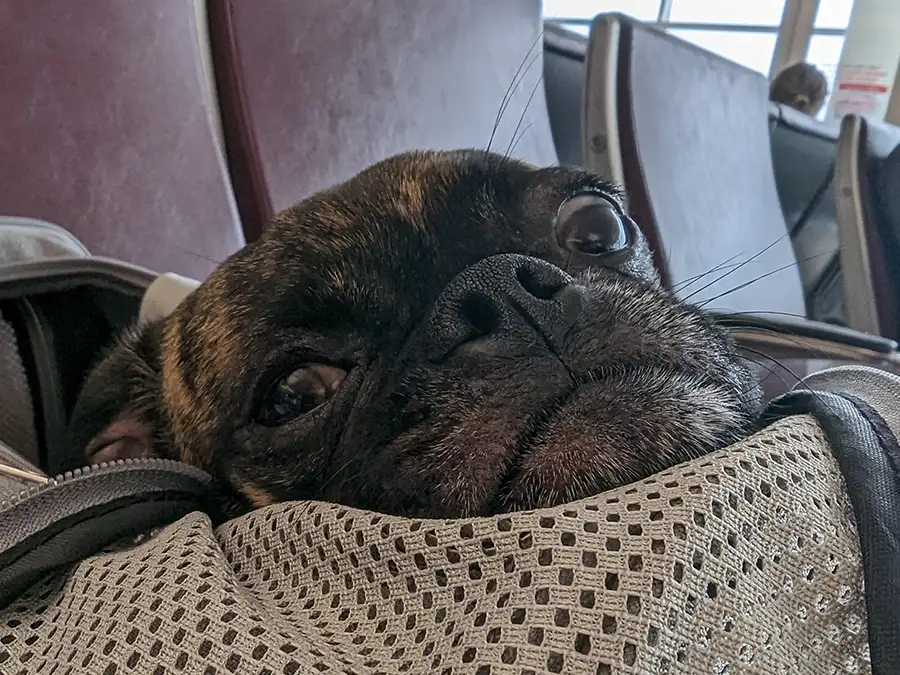
Beckham has been flying since he was 4 months old. I thought at first it would be straightforward, but it wasn’t always. Thankfully Beckham is relatively small (6 kg) so he travels in the cabin with me, since he is a pug and not allowed to travel in cargo.
We have a very specific routine every travel day that keeps his anxiety and stress levels down. I choose airlines and routes carefully. I break up longer journeys, and will choose a layover, specifically so Beckham can depart the plane and have a walk, bathroom break and snack. He is also a service dog, so I try to book early and call right after and confirm his spot and any required paperwork the airline needs.
It’s taken effort, and we have had to learn as we go, but many flights later Beckham has learned to love the adventure. He knows the airport means we are going somewhere new. When we land and I put his carrier on the seat and unzip it, his head pops out and people are so surprised there was a dog there the entire time.
Don’t miss this step
Flying with a dog involves more than just choosing between cabin and cargo. Health certificates, vaccinations, and destination specific requirements can stop your trip before it has started if you are unprepared.
👉 Download the full international dog travel checklist and avoid costly mistakes.
How to Decide: Cabin or Cargo?
Choosing between cabin and cargo ultimately comes down to your dog’s size, your travel route, and your comfort level with each option.
If your dog fits comfortably in an airline-approved carrier and meets size limits, cabin travel is usually the simpler and less stressful choice. You stay with your dog for the entire journey, and there are fewer variables involved.
If your dog is too large for the cabin, cargo becomes the only option. While it requires more preparation, many dogs travel safely this way every day when proper guidelines are followed.
If you’re still unsure, it helps to step back and look at the full travel process before deciding. Understanding each step in the how to fly with a dog step-by-step guide can make the right choice much clearer.
Frequently Asked Questions
Is it safer for dogs to fly in the cabin or cargo?
For most dogs, flying in the cabin is considered safer because they stay with you for the entire trip. However, cargo travel is also safe when proper precautions are taken, including using an airline-approved crate and following all airline guidelines.
Can large dogs fly in the cabin?
Large dogs are generally not allowed to fly in the cabin unless they are trained service dogs. Most airlines require dogs that exceed size and carrier limits to travel in cargo.
What dogs are not allowed to fly in cargo?
Many airlines restrict snub-nosed (brachycephalic) breeds, such as bulldogs and pugs, from flying in cargo due to increased breathing risks. Some airlines also have temperature restrictions that limit when certain dogs can travel.
Is cargo stressful for dogs?
Cargo travel can be stressful due to separation and unfamiliar surroundings, but proper preparation can significantly reduce anxiety. Crate training, choosing direct flights, and avoiding extreme weather conditions all help improve the experience.
Can my dog move around during the flight?
Dogs traveling in the cabin must remain inside their carrier for the duration of the flight. In cargo, dogs are secured in their crate and cannot move freely, but the crate must be large enough for them to stand, turn around, and lie down comfortably.