Traveling to Mexico with a dog
🟢 Last Updated: April 2026
Traveling to Mexico with a dog is easier than people expect. Especially if you are coming from Canada or the United States. Mexico’s entry process is straightforward but your airline, route, documents, and return travel plans matter.
The most important thing to understand is that Mexico’s entry rules, your airline’s pet policy, and your return or onward travel plans are all separate. This guide gives you the full Mexico dog travel overview then points you towards more detailed guides for each step.
I’ve brought Beckham into Mexico multiple times from different countries and the process has been simple when the paperwork, airline rules, and arrival inspection expectations were clear ahead of time.
Mexico Dog Travel QUICK start

Requirement
Quick answer
Difficulty
Easy — simple for most personal dogs.
Health certificate
Not required from the U.S. or Canada; Other countries required within 15 days of travel
Rabies vaccine
Must be current and administered at least 30 days prior to travel
Titer test
Not required
Parasite treatment
Internal and external parasite treatment required within 6 months prior to travel
Microchip
Not required but strongly recommended
Import permit
Not required
Quarantine
Not required if document and health requirements are met
Mexico dog travel guides
Use these guides to plan each part of your trip – from entry rules and health certificates to flying, arrival, and common mistakes.

Do you need to dog health certificate for Mexico?
Check whether Mexico requires a health certificate for your route.
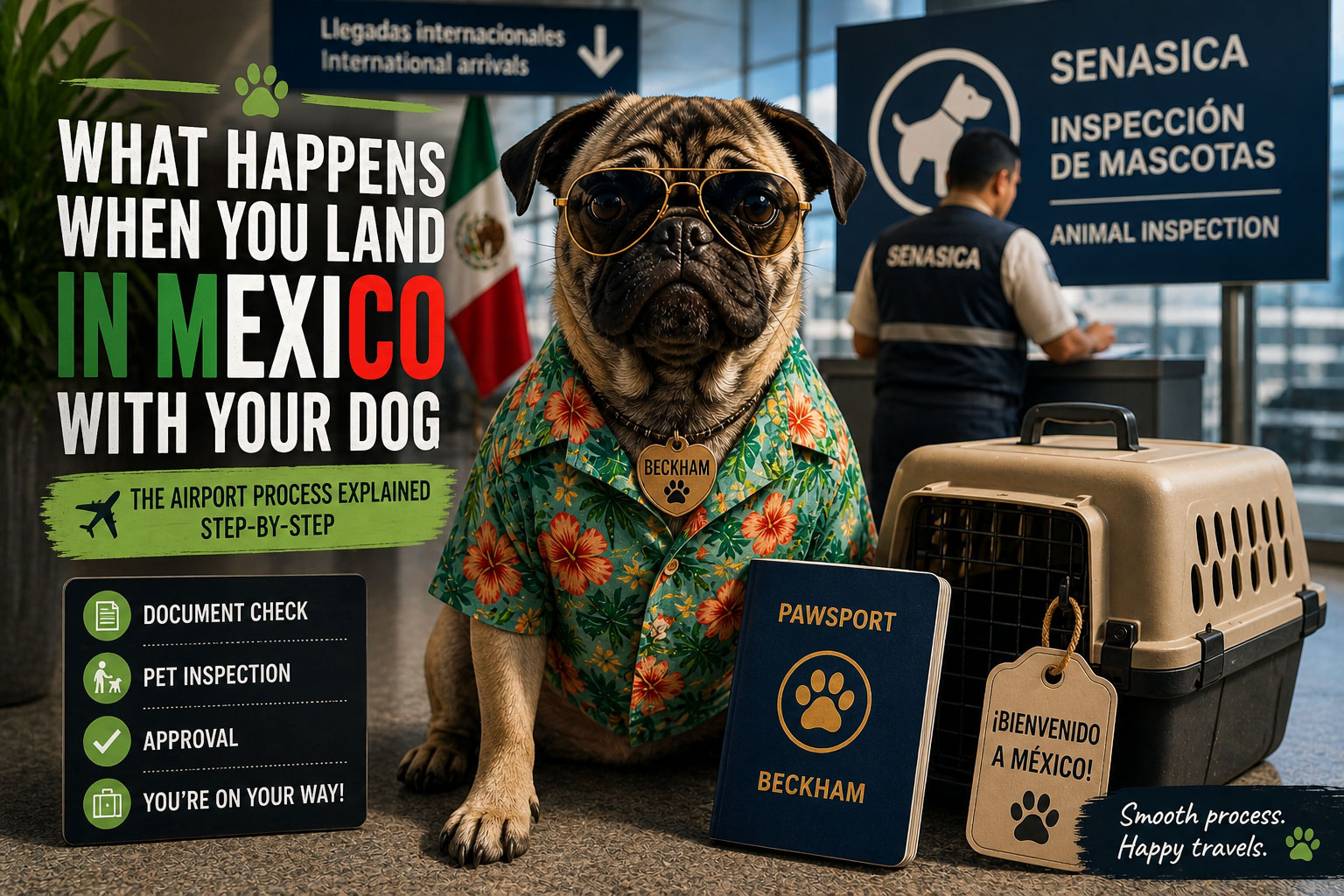
What happens when you land in Mexico with your dog?
Learn what to expect at immigration, baggage claim, SENASICA, and customs.
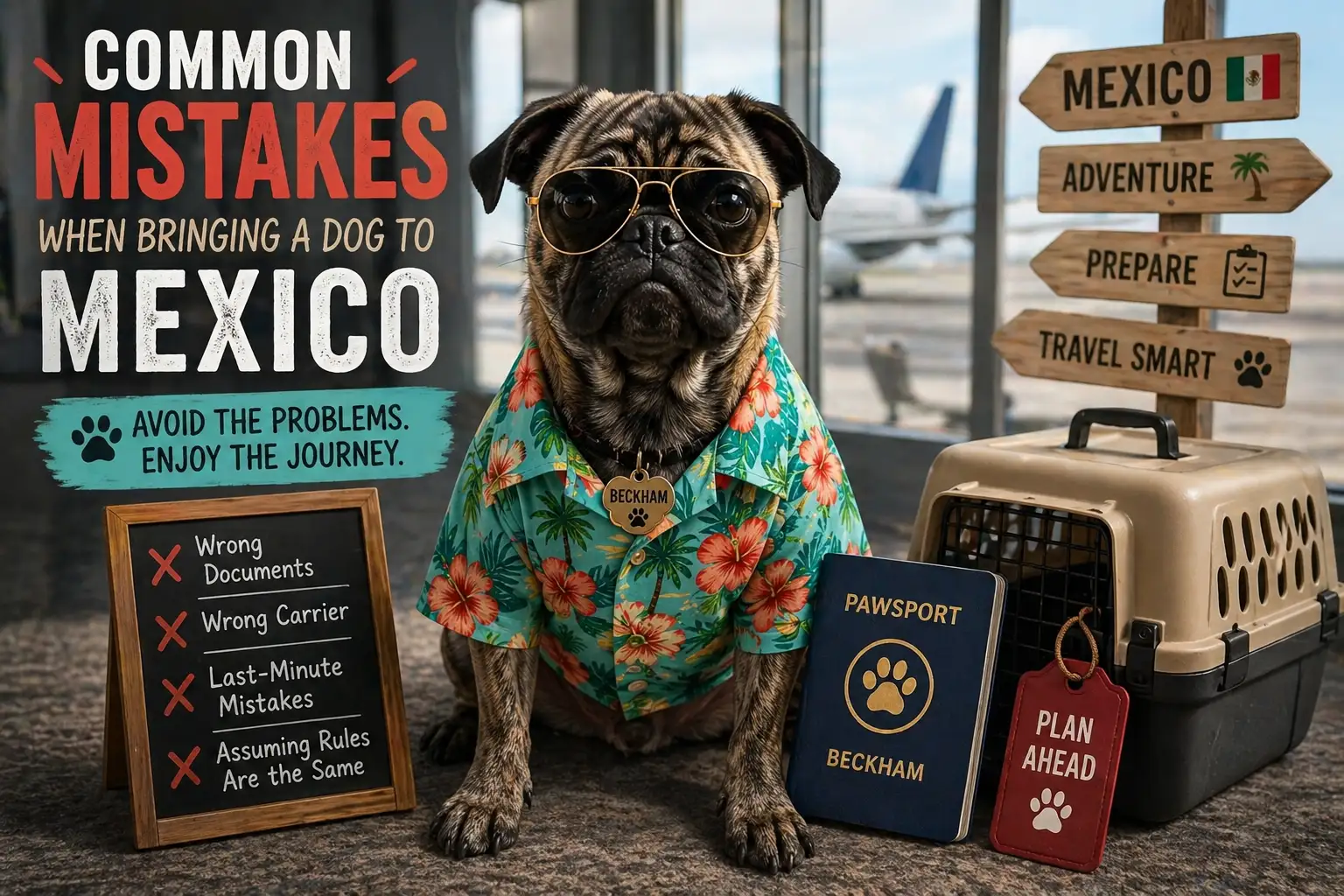
Common mistakes when bringing a dog to Mexico
Avoid the document, airline, timing, and arrival mistakes that cause problems.
How easy is it to bring your dog to Mexico?
Traveling to Mexico with a dog is fairly straightforward for many trips. The exact steps will depend on how you are traveling and where you are coming from. Mexico does not require a health certificate at the border for dogs coming from Canada or the United States but your dog will still be inspected upon arrival. Your airline may have other rules however.
For most travelers the process is easy once they know the basics. Confirm your route, check the airline requirements, and bring the right documents for inspection. If you want the full walkthrough start with the step-by-step guide and then check the airline and health certificate pages.
Key requirements for bringing a dog to Mexico
The main things to check are your dog’s travel route, vaccination records, and the arrival inspection rules. If you are flying your airline may also ask for its own paperwork, carrier requirements, or a recent vet check before boarding.
A simple Mexico dog-travel checklist:
- Rabies vaccination proof.
- General health and vaccination records.
- Airline paperwork, if you are flying.
- A clean carrier with no bedding or extras for arrival inspection.
- Enough pet food for the day of arrival only.
If your dog is coming from outside the U.S. or Canada, or if your route includes another country, the rules can change so that is the point where you should open the health certificate page and the step-by-step guide.
Get The Complete Mexico Dog Travel Guide
Step-by-step timeline, exact requirements, real airport experience, and everything you need to avoid getting denied at check-in.
Download the Full GuideCommon mistakes to avoid
Bringing a dog to Mexico is usually manageable but a few avoidable mistakes can slow things down at the airport or create extra stress before you travel. The biggest issues usually come from mixing up airline rules with Mexico entry rules or from assuming your route works the same way for every trip.
Assuming airline rules and Mexico rules are the same. Your airline may require paperwork or crate details that Mexico itself does not.
- Not checking arrival inspection requirements. Mexico still inspects dogs on arrival so your pet should be clean, calm, and ready for review.
- Ignoring route differences. The requirements can change depending on whether you are coming from the U.S., Canada, or another country.
- Packing the wrong items for the airport. Keep documents easy to reach and avoid overpacking the carrier.
- Leaving health certificate questions too late. If your route might require one confirm it before you travel so you do not have to scramble at the last minute.
What the travel process looks like
Bringing a dog to Mexico is straightforward once you know the order of the steps. The process is really about confirming your route, preparing the right documents, and then going through SENASICA inspection when you arrive.
- Check your route and entry rules. Confirm whether you are flying or driving and whether your trip starts in the U.S., Canada, or another country.
- Confirm your documents. Make sure your rabies proof and any airline paperwork are ready before you travel.
- Prepare your dog for inspection. Your dog should be clean, calm, and ready for a physical check at arrival.
- Arrive and go through SENASICA. At the airport or border official personnel will review the dog and the documents.
- Continue on once cleared. If everything is in order you can move on with your trip.
Leaving Mexico With Your Dog
Leaving Mexico with a dog is generally straightforward but requirements will depend on your destination country. Mexico has minimal import restrictions but you must meet the import rules of the country you are visiting next.
In most cases, this involves a veterinary visit before departure to obtain a health certificate issued within the required timeframe. Some destinations may also require additional documentation or specific timing.
In most cases, this involves a veterinary visit before departure to obtain a health certificate issued within the required timeframe. Some destinations may also require additional documentation or specific timing.
Planning ahead is key — especially if you are returning to a country with stricter entry requirements. Giving yourself enough time to prepare documents will help avoid delays or last-minute issues.
Driving to Mexico With a Dog
Driving to Mexico with a dog is often the easiest and most flexible option. Compared to flying, the process is more relaxed, and inspections at land borders are typically less strict.
You should still travel with the same core documents, a valid rabies vaccination and a recent health certificate, even though they are not always checked when crossing by car. Having them ready ensures you won’t run into issues if asked.
At the border, inspections can vary. In many cases you may not be asked for documentation, but authorities always have the right to check your dog’s health and condition. Making sure your dog is clean and free of visible parasites is still important.
One of the biggest advantages of driving is flexibility. You avoid airline restrictions, crate requirements, and temperature limitations, making the experience less stressful for both you and your dog.
What’s it Like in Mexico With a Dog?
Mexico is a very dog-friendly country, especially in cities and popular travel destinations. Dogs are a normal part of everyday life, you’ll see them in parks, walking through neighborhoods, and relaxing alongside their owners at outdoor cafes. In many areas, people are welcoming and comfortable around dogs, which makes settling in easy.
Traveling in Mexico is different from North America or Europe. Infrastructure can vary, sidewalks aren’t always consistent, and not every space is designed with dogs in mind. Heat is also a major factor in many parts of the country, so planning your day around cooler mornings and evenings becomes important.
In places like Mexico City, parks, cafes, and neighborhoods are surprisingly accommodating once you find your rhythm. In beach destinations like Playa del Carmen or Puerto Vallarta you will see dogs out early in the morning or at sunset, when the heat is more manageable. Many rentals are pet-friendly, especially in areas popular with tourists and digital nomads.
For us, Mexico was a magical place. Beckham quickly settled into a rhythm of morning walks, then a long afternoon relaxing inside, and evenings out exploring. Restaurants are very accommodating of dogs and Beckham soon began to assume any restaurant we went to was going to bring him a chicken breast.
Mexico is a great place to travel with your dog if you are looking for a mix of convenience, flexibility, and everyday comfort. As long as you plan around the climate, and stay aware of your surroundings, it’s a destination where you and your dog will quickly settle in and enjoy the experience.
Travel to Mexico With Your Dog — Without the Guesswork
Know exactly what to do, when to do it, and what to expect at every step — from vet visit to arrival.
Download Your Mexico GuideFrequently Asked Questions
Do dogs need to be inspected on arrival?
Yes. Dogs entering Mexico are inspected on arrival by SENASICA, which checks the pet and the documents presented at entry.
Do I need a health certificate to bring my dog to Mexico?
If you are traveling from the U.S. or Canada, Mexico generally does not require a health certificate for entry. If you are coming from another country, the requirement can be different.
What papers should I bring?
Bring rabies proof, any airline-required paperwork, and anything relevant to your route so you are ready for inspection at arrival.
Can my dog leave and return to Mexico?
Yes, but return travel may require different paperwork than entry into Mexico, so check the next destination or return-airline rules before you leave.
Official Resources
While this guide is designed to simplify the process, you can verify the latest requirements using official government sources below.
- SENASICA Requirements Consultation Module – Interactive tool to check specific import requirements for dogs
- SENASICA Main Website – General information on bringing a dog into Mexico