How to Bring a Dog to Colombia (Step-by-Step)
🟢 Last Updated: May 2026
Traveling to Colombia with your dog is manageable once you understand the timing and paperwork. This free guide gives you a clear overview of the requirements, common mistakes, and the next steps for planning your trip.
The biggest things to get right are the health certificate, vaccine records, parasite treatment, and ICA inspection when you arrive. Colombia’s process can feel detailed at first but it is much easier once you know what to prepare in advance.
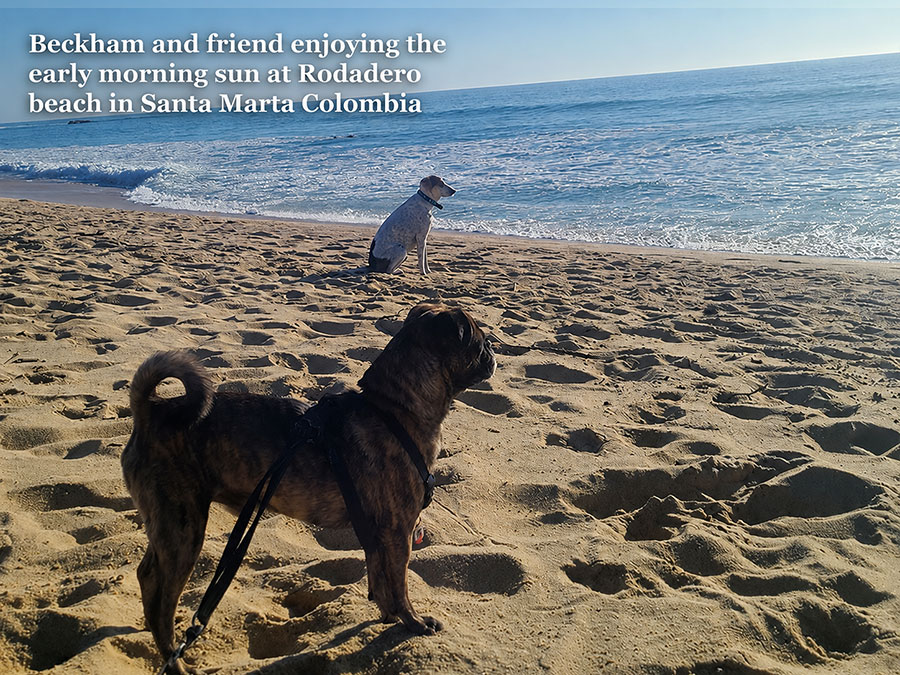
Includes Beckham and my experiences from Summer & Fall 2025
Colombia dog travel QUICK SUMMARY
Requirement
Quick answer
Difficulty
Moderate — paperwork and ICA arrival inspection matter.
Health certificate
Required and must be endorsed within 10 days of travel
Rabies vaccine
Must be current and administered at least 21 days prior to travel
Titer test
Not required
Parasite treatment
Internal and external parasite treatment required within 30 days of arrival in Colombia
Microchip
Not required but highly recommended
Import permit
Not required
Quarantine
Not required if document and health requirements are met
Get the complete Colombia Dog Travel Guide
Get step-by-step entry timelines, land/air travel requirements, printable checklists, and our local guide on what it’s actually like navigating Colombia with a dog for just $9.95
Get The Complete GuideStart here: Colombian dog travel guides

Dog health certificate for Colombia
A guide to the certificate, timing, and endorsement steps.
Flying to Colombia with a dog
A summary of airline rules, booking details, and travel prep.
How easy is it to bring your dog to Colombia?
Bringing a dog to Colombia is manageable if you plan ahead and keep the paperwork organized. Most of the work is just making sure your documents are ready before travel and your airline rules are clear if you are flying.
The trip becomes much easier once you know what Colombia expects and you are not trying to sort things out at the last minute. For most travelers the main challenge is timing the paperwork correctly and not the travel itself.
Key requirements for bringing a dog to Colombia
The key requirements for Colombia are a health certificate, rabies vaccination, parasite treatment, and the right supporting documents. If your route or your dog’s situation is more complicated there may be extra steps as well.
- Health certificate. Dogs entering Colombia need a health certificate from an authorized veterinarian and it has to be completed close to travel.
- Rabies vaccination. Your dog’s rabies proof should be current and ready to show with the rest of the paperwork.
- Core vaccine records. Bring a full vaccine history so the documents match Colombia’s entry requirements.
- Parasite treatment. Treatment should be documented within the required time window before travel.
- Original paperwork and copies. Keep the originals easy to access and bring a copy as backup.
- ICA inspection. Be prepared to present your documents when you arrive in Colombia.
Common mistakes to avoid
Bringing a dog to Colombia is usually manageable but a few avoidable mistakes can create delays or extra stress. The biggest issues come from getting the timing wrong or assuming airline rules and Colombia’s entry rules are the same.
- Waiting too long on the health certificate. Colombia’s certificate timing is tight and leaving it too late can create problems fast.
- Assuming airline rules and entry rules are the same. Your airline may have extra crate or booking requirements that Colombia does not.
- Forgetting parasite treatment. If the treatment is missing or not documented properly your paperwork may not be complete.
- Missing vaccine records. Your rabies proof and supporting vaccine history should be easy to review.
What the travel process looks like
Bringing a dog to Colombia is mostly a step by step paperwork and timing process. The rest of the trip is about finishing the ICA process, keeping your documents ready, and getting through the arrival inspection.
- Check your route and travel method. Confirm whether you are flying and whether your dog is traveling as accompanied baggage or cargo.
- Register for the ICA process. Colombia’s entry process includes a sanitary inspection certificate step and you will need to complete the required pre-registration before travel.
- Prepare the documents. Bring your health certificate, rabies proof, parasite-treatment record, and any supporting vaccine records.
- Confirm airline rules. Review the pet policy, carrier, and booking requirements separately from Colombia’s entry process.
- Travel to Colombia. Keep the original paperwork and a copy with you so you can present them quickly if needed.
- Go through ICA inspection. On arrival ICA reviews the documents and inspects the animal before issuing the sanitary inspection certificate.
Leaving Colombia With Your Dog
Leaving Colombia with a dog is straightforward once you finish the ICA departure process. The main thing is to register, request the inspection, and complete the sanitary certificate steps before your flight.
If you are flying out plan to do this close enough to departure that the certificate is still valid, but not so late that you run out of time before check-in. The airline is separate from ICA so you should confirm your carrier and booking rules before travel.
The easiest approach is to check the ICA exit process first and confirm airline requirements. Finally make sure your dog’s records are ready to presented at the airport. That keeps the process from turning into a last-minute scramble.
Driving to Colombia With a Dog
Driving to Colombia with a dog is technically possible but not a practical option. From the north there is no road into Colombia. The Darien Gap completely blocks overland travel. It is a remote jungle with no infrastructure and there is no legal or safe way to drive through it. Travelers coming from North or Central America must ship their vehicle or fly instead.
From the east crossing through Venezuela is not recommended. Border regions are unstable, have safety concerns, and unpredictable conditions. For most travelers this route simply isn’t worth the risk.
That leaves the southern border with Ecuador. Crossing at the main border at Rumichaca Bridge is the standard route. Some travelers drive across, while others will take a bus to the bridge, and then walk across with their dog. You will need to meet the requirements for both Ecuador and Colombia. This includes having the health certificate and treatments properly timed and recorded.
For most travelers flying with their dog is still the better option. It is faster, more predictable, and avoids the complexities of regional risks and additional paperwork.
Your On-the-Ground Companion in Colombia
This guide doesn’t stop at customs. Learn what it’s actually like to live in and travel around Colombia with your dog. Get the complete guide for $9.95 and enjoy a frictionless trip from start to finish.
Get the Colombia Dog Travel GuideFrequently Asked Questions
Do dogs need a health certificate for Colombia?
Yes. Dogs traveling to Colombia must have a health certificate as part of the ICA entry process, and the certificate must meet the requirements of your country of origin and be valid at the time of travel.
Does Colombia require a rabies vaccine for dogs?
Yes. Your dog needs valid rabies vaccination proof, and the vaccine generally must be given at least 30 days before travel.
Can my dog fly in the cabin to Colombia?
Possibly, but that depends on your airline’s rules, your dog’s size, and the route you are flying.
Does Colombia have an arrival inspection?
Yes. ICA reviews your documents and inspects the animal on arrival before completing the sanitary inspection step.
Official Resources
While this guide is designed to simplify the process, you can verify the latest requirements using official government sources below.
- Instituto Colombiano Agropecuario (ICA) – all import requirements including the Certificado de Inspección Sanitaria (CIS)