Traveling to Costa Rica with a dog
🟢 Last Updated: May 2026
Planning to bring your dog to Costa Rica? This guide gives you the main entry rules, paperwork steps, airline considerations, and arrival process in one place.
Costa Rica is one of the more manageable countries for dog travel but you still need to prepare the right health certificate, vaccination records, parasite treatment details, and airline paperwork before you fly.
Use this page as your starting point. For the full step-by-step version you can also download the Costa Rica Dog Travel Guide
Costa Rica dog travel QUICK START
Requirements
Quick answer
Difficulty
Moderate — timing and endorsement matter
Health certificate
Required and must be endorsed within 14 days before travel. Must be in Spanish or accompanied by an official translation
Rabies vaccine
Must be current and administered at least 21 days prior to travel
Titer test
Not required
Parasite Treatment
Internal and external parasite treatment required within 15 days before travel
Microchip
Not required but highly recommended
Import Permit
Not required for dogs traveling with their owner
Quarantine
Not required if document and health requirements are met
Start with these Costa Rica dog travel guides
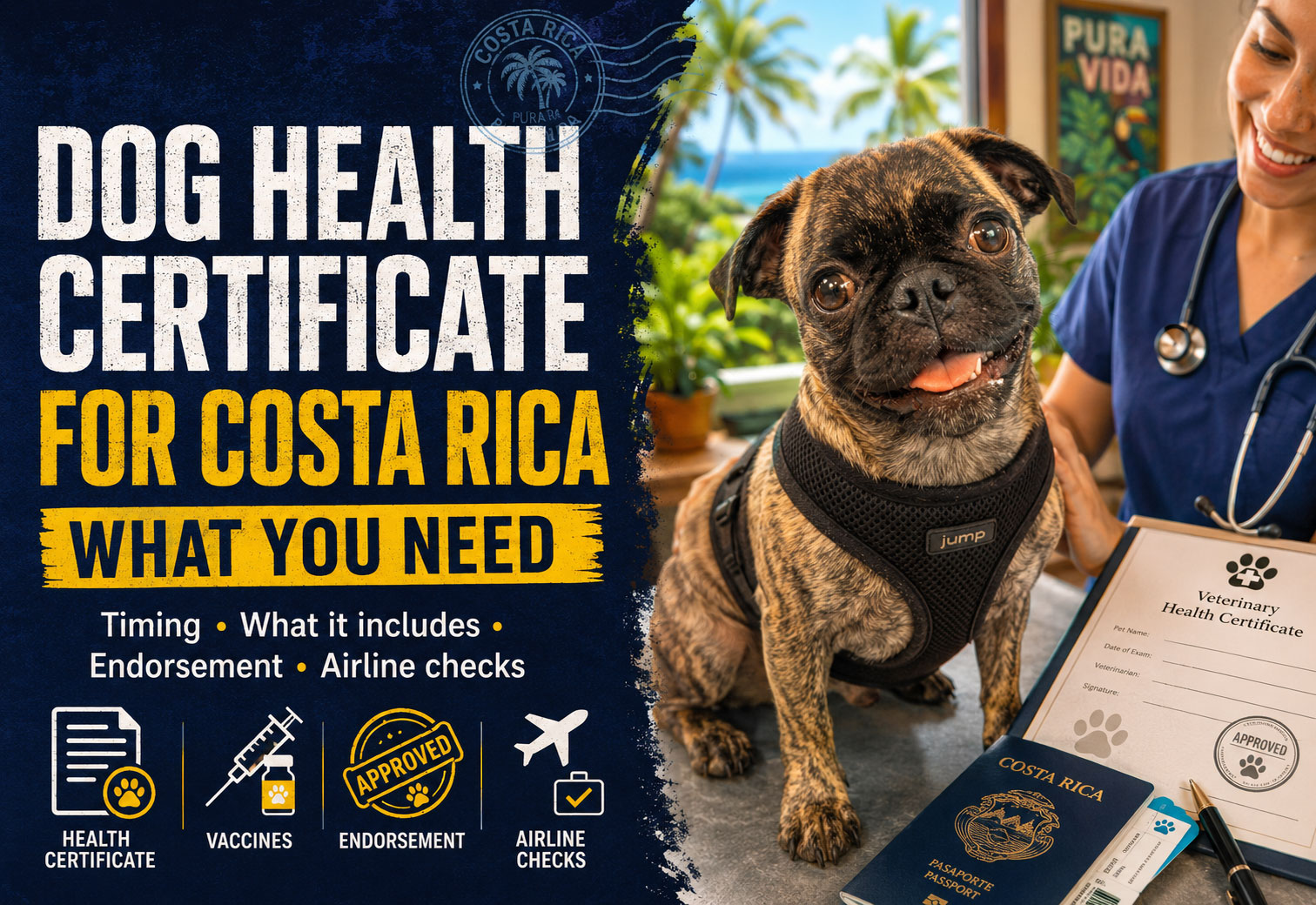
Dog health certificate for Costa Rica
Read this before booking your vet appointment so you understand timing and treatment requirements.
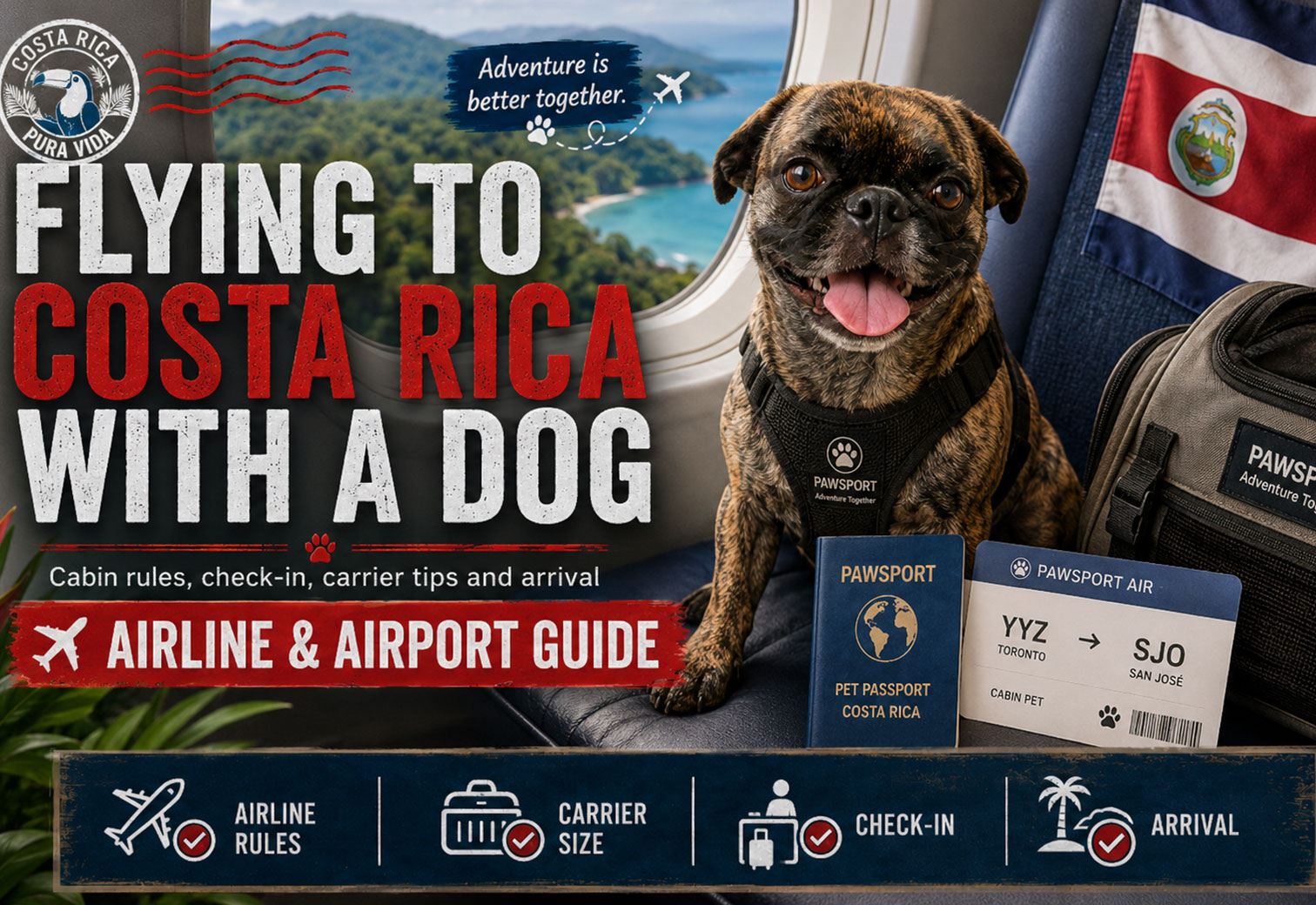
Flying to Costa Rica with a dog
Use this guide before booking your flight so you can confirm cabin, cargo, carrier, and check-in rules.
How easy is it to bring a dog to Costa Rica?
If you plan ahead and keep the paperwork organized bringing a dog to Costa Rica is usually straightforward. For most travelers the main things to focus on are the health certificate, vaccination timing, and making sure your documents are ready before departure.
The process is especially manageable if you know your route early and confirm airline rules in advance. If your trip involves a dog traveling as cargo or unaccompanied the requirements become a little more detailed, so it helps to check those details before booking.
The easiest approach is to start with the documents checklist, then review the health certificate guidance, and finally confirm your airline’s pet policy. That way you can move through the process without last-minute surprises.
Key requirements for bringing a dog to Costa Rica
For most travelers the main requirements for Costa Rica are a microchip, rabies vaccination proof, a health certificate, and parasite treatment timed correctly before travel. If your dog is traveling as cargo or unaccompanied there may be extra steps as well.
- Microchip. Your dog should have a microchip, and the number should appear on the documents you bring. That makes it easier to match your dog with the paperwork during the process.
- Rabies vaccination. This is one of the most important requirements. Make sure the timing is current and that you can show proof if asked.
- Health certificate. A health certificate is the key travel document. It should be completed before departure and match the rest of your paperwork.
- Parasite treatment. Many travelers also need parasite treatment completed within the required time window before travel. The timing matters so it is worth checking early.
See the Exact Process Step-by-Step
Get the complete step-by-step Costa Rica dog travel guide covering documents, timelines, and arrival.
Get the Costa Rica GuideCommon mistakes to avoid
Bringing a dog to Costa Rica is usually manageable but a few avoidable mistakes can slow things down or create extra stress. The biggest issues usually come from mixing up airline rules with Costa Rica entry rules or from assuming your paperwork is complete too early.
- Assuming airline rules and Costa Rica rules are the same. Your airline may require paperwork or crate details that Costa Rica itself does not.
- Not checking the health certificate timing. This is one of the most important parts of the process and the timing has to line up correctly.
- Leaving out vaccination or microchip details. Your paperwork should match your dog exactly.
- Forgetting parasite treatment timing. If it is required for your trip it needs to be done within the right window.
- Waiting too long to confirm special-case rules. Cargo and unaccompanied travel can involve extra steps.
What the travel process looks like
Bringing a dog to Costa Rica is mostly a step-by-step paperwork and timing process. Once you know your route the rest of the trip is about getting the documents ready, checking airline rules, and making sure your dog is prepared for travel.
- Check your route and travel method. Confirm whether you are flying or driving and whether your dog is traveling with you as cargo or unaccompanied.
- Prepare the required documents. Gather your microchip details, rabies proof, health certificate, and any other paperwork that applies to your trip.
- Confirm airline rules. Review the pet policy, carrier requirements, and any booking steps before you buy your ticket.
- Keep the timing on track. Make sure vaccines, parasite treatment, and the health certificate all fall within the correct window.
- Travel to Costa Rica. Bring your documents with you and be ready to show them if asked before or during arrival.
- Go through arrival review. If your trip includes extra inspection or endorsement steps, follow those before continuing on with your trip.
Leaving Costa Rica With Your Dog
Costa Rica is relatively straightforward to enter with a dog, but leaving can be more complex. You will have to meet both Costa Rica’s export requirements and the import rules of your destination country, which can vary depending on where you are headed.
In most cases, this will involve a veterinary visit before departure, updated documentation and coordination with local authorities. Timing becomes especially important here, particularly if your next destination has stricter requirements. Planning ahead helps avoid delays or last-minute problems at the airport.

What’s it Like in Costa Rica With a Dog?
Costa Rica is one of the most rewarding places to travel with your dog. It’s a country where dogs are a part of everyday life. You will see them at cafes, on beaches, and walking through town with their owners. In many areas, especially smaller towns and tourist spots, dogs are welcomed without much hesitation.
That said, Costa Rica is different from traveling in Europe or North America. Infrastructure is less standardized, public transportation options are limited for dogs, and the environment plays a big role in day-to-day life. Heat, humidity, and wildlife are all factors to be aware of, especially outside of the cities and towns.
In places like Puerto Viejo, mornings start with dogs running freely on the beach with their owners before the heat sets in. In towns like La Fortuna, it is common to meet other travelers and their dogs. Many rentals are pet-friendly. Even in San Jose dogs adapt quickly. Cafes, parks, and neighborhoods are generally accommodating once you adapt to the rhythm of the city.
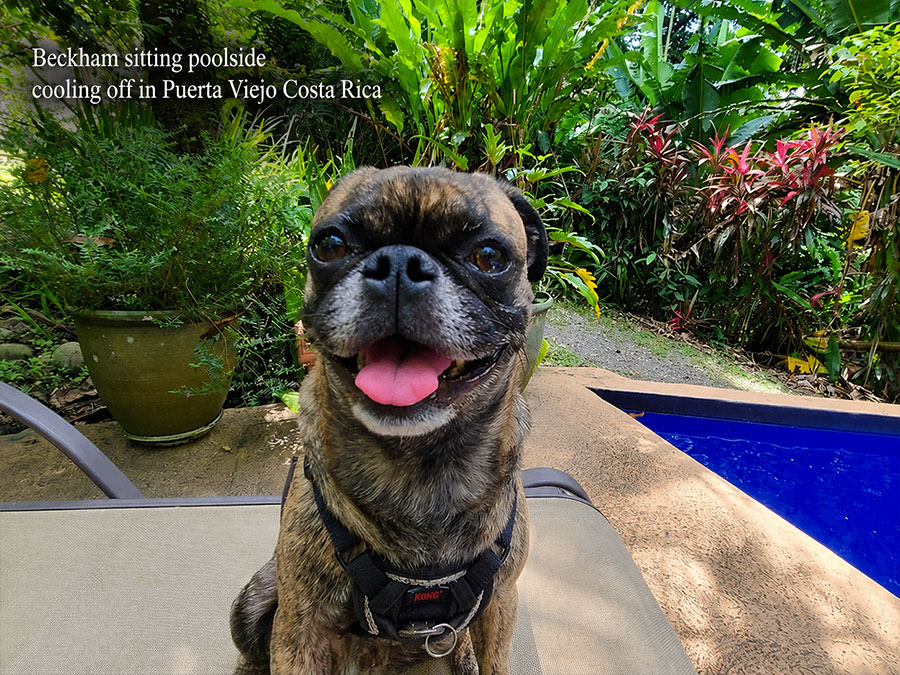
For us, Costa Rica was one of those places that just worked. Beckham made friends everywhere we went – on beaches, in small towns, and outside local markets. One morning during our walk on the beach, I watched as he chased a group of dogs straight into the ocean… then stopped the second his paws hit the water and remembered he’s a pub who hates getting wet.
Costa Rica is an incredible place to explore with your dog and you both will enjoy it immensely. It’s a destination that offers freedom and adventure for you and your dog as long as you are prepared and stay aware of your surroundings.
Get the Complete Costa Rica Dog Travel Guide
Avoid delays, missing documents, or surprises at the airport. This guide walks you through the exact process travelers use to bring their dogs into Costa Rica smoothly.
Get the Instant AccessFrequently Asked Questions
Does Costa Rica require a dog health certificate?
Yes. For most travelers, a health certificate is one of the main required documents for bringing a dog to Costa Rica.
When should I get my dog’s health certificate for Costa Rica?
Get it close enough to your trip that the timing still fits the required window, but not so late that you risk missing your departure.
How early should I get my dog’s rabies vaccine before Costa Rica?
Make sure the rabies vaccination timing matches the travel requirements and bring proof with you.
Who can issue the Costa Rica health certificate?
Your veterinarian should issue it, and in some cases additional endorsement or import-permit steps may apply.
What should the Costa Rica health certificate include?
It should match your dog’s details, vaccination information, treatment records, and any other items required for your route.
Official Resources
While this guide is designed to simplify the process, you can verify the latest requirements using official government sources below.
- SENASA – Pet import rules and official entry requirements
- SENASA Mascot Page – general guidance on bringing dogs in and out of Costa Rica